
Bitcoin Price Today: BTC Price, Market Update & What’s Next
Bitcoin remains one of the most closely watched financial assets in the world, and today’s BTC market is once again being shaped by a combination of U.S. economic data, Federal Reserve policy expectations, ETF flows, investor sentiment and broader risk appetite.
As of September 12, 2026, Bitcoin is trading around the $77,000 area. The cryptocurrency recently moved above $81,000 before pulling back as traders became more cautious ahead of the Federal Reserve’s September meeting. Current market conditions show that Bitcoin remains highly sensitive to changes in interest-rate expectations and institutional demand.
For U.S. investors and crypto market watchers, the key question is no longer simply whether Bitcoin can rise. The bigger question is whether BTC can regain strong momentum after its recent pullback…….Link……..Crypto latest news
Bitcoin Price Today
Bitcoin is currently trading around the $77,000 level, with intraday volatility remaining significant. Recent market data shows BTC moving between approximately $76,000 and $79,500 during the latest trading session.
Bitcoin also remains down from its recent September high above $82,000. This pullback has created uncertainty among traders, but it has not necessarily changed the longer-term Bitcoin story.
The market is currently balancing two opposing forces.
On one side, institutional interest and Bitcoin ETF demand have provided support for BTC. On the other side, concerns about U.S. interest rates, inflation and broader financial-market conditions are creating selling pressure.
That combination is why Bitcoin’s price can move sharply in either direction within a relatively short period.
Why Is Bitcoin Price Moving Today?
Several important factors are influencing Bitcoin right now.
1. Federal Reserve Interest Rate Expectations
The Federal Reserve is one of the biggest short-term influences on Bitcoin and other risk assets.
Recent U.S. inflation data has increased expectations that the Federal Reserve could raise interest rates at its September meeting. August consumer prices increased 0.4% month over month and were up 3.4% from a year earlier. Core CPI increased 0.3% during the month.
Higher interest rates can create pressure on Bitcoin because investors may become more interested in traditional yield-producing assets such as Treasury securities.
When markets expect easier monetary policy, risk assets such as technology stocks and cryptocurrencies can benefit. When expectations shift toward higher rates, Bitcoin can face additional selling pressure.
The September Federal Reserve meeting is therefore one of the most important events for the crypto market.
2. Bitcoin ETF Flows
Bitcoin ETFs have become an important part of the U.S. crypto market.
Strong ETF inflows can indicate that investors are adding Bitcoin exposure through regulated investment products. Weak flows or outflows can indicate reduced demand or short-term profit-taking.
Earlier in September, U.S. spot Bitcoin ETFs experienced a strong wave of buying. On September 3, Bitcoin ETFs recorded approximately $731 million in net inflows, one of the strongest single-day inflow figures of the year.
However, ETF demand subsequently weakened.
Farside Investors data shows approximately $120.2 million in net outflows on September 9 and another $282.7 million in net outflows on September 10.
This reversal is important because ETF flows can influence the amount of institutional buying pressure entering the Bitcoin market.
If inflows return consistently, it could provide additional support for BTC. If outflows continue, Bitcoin may struggle to build a sustained recovery.
Bitcoin Recently Pulled Back From Above $80,000
Bitcoin’s recent price action has been a good example of how quickly sentiment can change in cryptocurrency markets.
BTC briefly moved above $81,000 earlier in September before losing momentum. More recently, Bitcoin has traded around the $77,000 area.
A previous market report showed Bitcoin falling to approximately $78,298 as investors became cautious ahead of the Federal Reserve’s September decision.
The decline does not automatically mean that Bitcoin’s broader trend has ended.
Crypto markets frequently experience sharp corrections after strong rallies. Traders who bought at lower prices may take profits, while leveraged positions can increase the size of a short-term move.
This creates a situation where Bitcoin can fall quickly even when long-term investors remain optimistic.
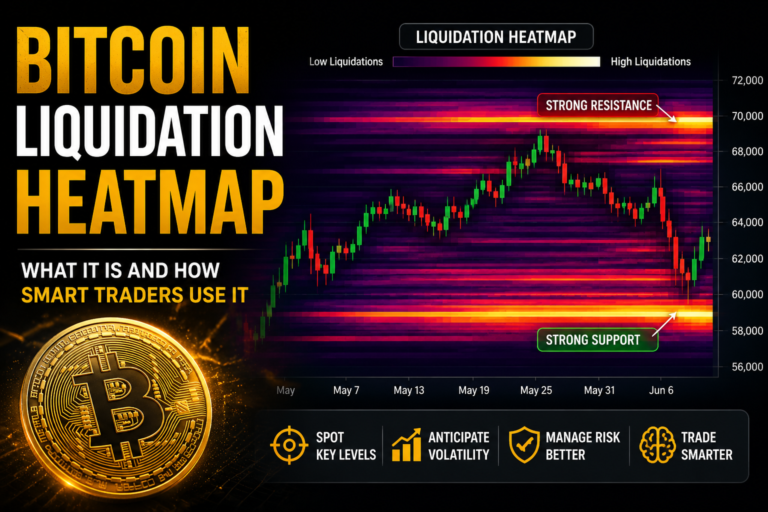
Key Bitcoin Price Levels to Watch
For traders, certain price areas can become particularly important because they may influence market psychology.
The first major area to watch is around $76,000–$77,000.
Bitcoin has recently traded around this region, making it an important short-term area for buyers and sellers.
If BTC continues to hold above this zone, traders may look for a recovery toward $79,000–$80,000.
A move back above $80,000 could improve market sentiment and potentially bring attention back toward the previous $81,000–$82,000 area.
On the other hand, a sustained move below the recent support region could increase the possibility of a deeper correction.
These levels should not be viewed as guaranteed support or resistance. Bitcoin can move rapidly through technical levels when major economic news or unexpected market events occur.
What Is Driving Bitcoin Investor Sentiment?
Bitcoin investor sentiment is currently being influenced by both traditional finance and cryptocurrency-specific factors.
The U.S. economy remains extremely important because the dollar, Treasury yields, inflation and Federal Reserve policy all affect global liquidity.
Higher Treasury yields can make risk assets less attractive, while lower yields and easier monetary conditions can encourage investors to take more risk.
Bitcoin is also increasingly connected to institutional financial markets because of the growth of spot Bitcoin ETFs.
This means that Bitcoin’s price is no longer driven only by crypto-native traders. Large asset managers, institutional investors and traditional-market participants can now gain Bitcoin exposure through exchange-traded products.
That has changed the structure of the Bitcoin market.
Could Bitcoin Recover?
A Bitcoin recovery remains possible, but several conditions could influence whether the next move is higher or lower.
The first is ETF demand.
If U.S. spot Bitcoin ETFs return to strong and consistent net inflows, that could provide an important source of demand.
The second factor is Federal Reserve policy.
A less hawkish Fed outlook could support risk assets, while expectations for additional rate increases could create pressure on Bitcoin.
The third factor is overall investor confidence.
If U.S. stocks and other risk assets remain strong, Bitcoin could benefit from improving risk appetite. If financial markets become more defensive, cryptocurrencies could experience additional volatility.
Bitcoin and the U.S. Economy
For a U.S. audience, understanding the relationship between Bitcoin and the American economy is increasingly important.
Bitcoin is a global asset, but the U.S. financial system has a major influence on crypto markets.
Changes in U.S. interest rates can affect the dollar and global liquidity. Inflation data can change expectations for Federal Reserve policy. Employment reports can influence economic forecasts. Treasury yields can affect how investors allocate capital.
All of these factors can indirectly influence Bitcoin.
This is why major U.S. economic reports often create significant BTC price movements.
Bitcoin ETF Demand Remains Important
The growth of Bitcoin ETFs has created a new way for investors to participate in the Bitcoin market.
Instead of purchasing and storing Bitcoin directly, investors can obtain exposure through financial products traded in traditional markets.
This has made Bitcoin more accessible to investors who already use brokerage accounts.
However, ETF flows can change quickly.
Strong inflows earlier in September showed that institutional demand can return rapidly. The subsequent outflows demonstrate that investors can also reduce exposure when market conditions become uncertain.
For this reason, Bitcoin ETF flows are worth watching alongside price charts rather than treating them as a standalone bullish or bearish signal.
Bitcoin Price Outlook
The short-term Bitcoin outlook remains uncertain.
BTC has demonstrated strength by recovering from previous market weakness and reaching above $80,000 earlier this month. However, the latest pullback shows that sellers remain active.
The next major catalyst is likely to be the Federal Reserve’s September meeting and the market’s interpretation of future monetary policy.
If the Fed takes a more aggressive approach because of persistent inflation, Bitcoin could remain under pressure.
If investors interpret the policy outlook as less restrictive than feared, Bitcoin could receive a boost.
ETF flows will also remain important.
A combination of improving ETF inflows, stronger risk appetite and a favorable interest-rate outlook could create the conditions for Bitcoin to challenge recent highs again.
Should Investors Buy Bitcoin Today?
Whether Bitcoin is attractive at today’s price depends on an investor’s risk tolerance, time horizon and overall financial situation.
Bitcoin remains a highly volatile asset. A move of several thousand dollars can happen relatively quickly, and investors should be prepared for significant price fluctuations.
Long-term investors may focus more on Bitcoin’s adoption, scarcity, institutional participation and broader cryptocurrency development rather than attempting to predict every daily move.
Short-term traders, however, may pay more attention to technical levels, ETF flows, economic data and Federal Reserve announcements.
There is no guaranteed Bitcoin price target, and past performance does not guarantee future results.
Investors should conduct their own research and consider their personal financial circumstances before making investment decisions.
What to Watch Next
Bitcoin investors should keep an eye on several major developments over the coming days.
First, watch the Federal Reserve’s September meeting and any changes to interest-rate expectations.
Second, monitor U.S. spot Bitcoin ETF flows. A return to sustained inflows could improve sentiment, while continued outflows could increase pressure on BTC.
Third, watch the $76,000–$80,000 trading range. A decisive move outside this area could provide traders with a clearer signal about short-term momentum.
Finally, investors should monitor inflation, employment, Treasury yields and the U.S. dollar because these traditional financial indicators can have a major effect on cryptocurrency markets.
Final Thoughts
Bitcoin price today reflects a market caught between institutional demand and macroeconomic uncertainty.
BTC remains around the $77,000 area after recently trading above $81,000. ETF flows have shown both strong demand and renewed outflows during September, while expectations surrounding the Federal Reserve have become increasingly important for risk assets.
For U.S. investors, the next major phase of Bitcoin’s price action may depend on whether institutional demand returns and how markets respond to the Federal Reserve’s interest-rate decision.
Bitcoin remains one of the world’s most volatile financial assets, but it also continues to attract significant attention from individual and institutional investors.
The key takeaway is simple: Bitcoin’s next major move may depend on the combination of ETF demand, Federal Reserve policy and overall market risk appetite.
As always, investors should use proper risk management and avoid making financial decisions based solely on short-term price predictions.