
The Ultimate Guide to the Best Crypto Wallets in the USA (2026)
Navigating the cryptocurrency landscape in 2026 requires more than just knowing which digital assets to buy; it demands a rock-solid strategy for keeping those assets secure. With the crypto market continuing to mature into a multi-billion-dollar industry expected to expand at over 20% CAGR into the 2030s, the infrastructure we use to store our digital wealth has evolved dramatically.
Whether you are a casual investor looking to buy your first fraction of a Bitcoin, an active decentralized finance (DeFi) trader seeking high yields, or an NFT collector, your digital wallet is your most important tool. For USA-based investors, balancing regulatory compliance, tax reporting integrations, and top-tier security is paramount.
In this comprehensive guide, we will break down exactly how crypto wallets work, explore the different types available, and review the absolute best crypto wallets in the USA for 2026.
What is a Crypto Wallet and How Does it Work?
At its core, a cryptocurrency wallet is a software program or physical device that allows you to store your public and private keys, interact with various blockchain networks, and monitor your digital asset balances.
A common misconception is that your crypto is actually inside the wallet. In reality, your cryptocurrency always lives on the blockchain. Your wallet simply acts as a secure digital keychain. It holds the cryptographic private keys that prove your ownership of those assets and allow you to authorize transactions. If you lose your private keys (and your backup seed phrase), you lose access to your funds on the blockchain—forever.
Crypto Wallet Types Explained
To choose the best crypto wallet for your needs, you must first understand the primary categories. Crypto wallets are generally divided by their connectivity (hot vs. cold) and who holds the keys (custodial vs. non-custodial),.
1. Hot Wallets (Software)
Hot wallets are digital storage solutions that are constantly connected to the internet. This internet connection makes them incredibly convenient for making daily transactions, interacting with smart contracts, and trading on the fly. However, this same connectivity makes them more vulnerable to online vectors like phishing attacks, malware, and hacking.
Hot wallets come in three main formats:
-
Mobile Wallets: Apps installed on your smartphone (e.g., Trust Wallet). They often use QR codes for easy payments.
-
Desktop Wallets: Software installed locally on your PC or Mac (e.g., Exodus). They give you full control but are only as secure as the computer they reside on.
-
Web/Browser Extension Wallets: Accessed through your internet browser (e.g., MetaMask). They are ideal for connecting to Web3 decentralized applications (dApps).
2. Cold Wallets (Hardware)
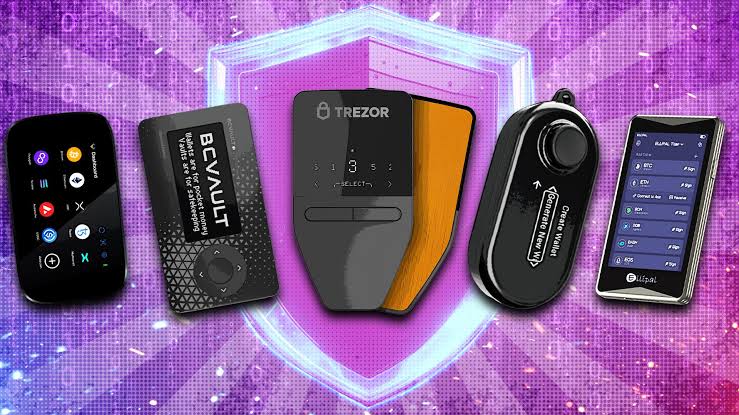
Cold wallets operate completely offline, making them the gold standard for long-term cryptocurrency storage. They are typically physical electronic devices resembling USB drives that generate and store your private keys in an isolated, secure environment.
Because they are never exposed to the internet unless you plug them in to sign a transaction, they are virtually immune to remote digital hacks. Hardware wallets are highly recommended if you are holding significant amounts of capital.
3. Custodial vs. Non-Custodial
-
Custodial Wallets: A third party (usually a centralized exchange like Coinbase or Binance) holds your private keys for you. It is similar to a traditional bank. If you forget your password, customer support can help you recover your account. However, you don’t have true sovereignty over your funds.
-
Non-Custodial (Self-Custody) Wallets: You, and only you, hold the private keys. This embodies the crypto ethos of “not your keys, not your coins.” While this provides total freedom and security from exchange bankruptcies, it also means you bear 100% of the responsibility. If you lose your backup phrase, no customer support team can save you.
To help visualize these trade-offs, explore this interactive breakdown:
Key Insight: In 2026, many users employ a hybrid approach: they keep a small amount of trading capital in a convenient hot wallet (like MetaMask) and store their long-term wealth in a cold hardware wallet (like a Ledger).
Best Hot (Software) Wallets in the USA for 2026
If you want fast access, smooth user interfaces, and direct pathways to DeFi and Web3, here are the top software wallets leading the US market in 2026.
1. Exodus: Best Overall Desktop & Mobile Experience
Exodus remains the top choice for investors who want an incredibly sleek, visual, and user-friendly experience,. Often described as having a “Wall Street terminal” feel for retail users, Exodus is beautiful and intuitive.
-
Best For: Beginners and visual portfolio managers.
-
Key Features: Supports over 50 blockchains, features an integrated crypto-to-crypto exchange, and syncs seamlessly between desktop and mobile.
-
2026 Update: Exodus has deepened its partnership with Trezor, allowing users to manage their hardware-secured assets directly within the beautiful Exodus software interface.
2. MetaMask: The Undisputed King of Web3 and DeFi
MetaMask (metamask.io) is the primary gateway to the decentralized web. Originally an Ethereum-only browser extension, by 2026 it has evolved into a multi-chain powerhouse,.
-
Best For: Advanced DeFi participants, yield farmers, and NFT collectors.
-
Key Features: Flawless integration with almost every dApp on the market. Through recent “Snaps” upgrades, it now connects to non-EVM networks like Solana and Bitcoin.
-
Trade-offs: The interface can still feel slightly intimidating for absolute beginners.
3. Coinbase Wallet: Best Exchange-Linked Option
Not to be confused with the custodial Coinbase exchange app, the Coinbase Wallet is a standalone, non-custodial application.
-
Best For: US investors deeply integrated into the Coinbase ecosystem who are ready to transition to self-custody.
-
Key Features: Smart UX backed by a highly trusted US brand. It supports Ethereum, Base, major L2s, Solana, and Bitcoin.
-
2026 Update: It offers gasless transactions on supported dApps and features an optional encrypted cloud backup for your seed phrase, lowering the risk of accidental loss.
4. Phantom: Best for Multi-Chain & NFT Users
Initially the darling of the Solana ecosystem, Phantom has successfully transformed into a premier multi-chain wallet spanning Ethereum and Polygon as well,.
-
Best For: Solana enthusiasts and heavy NFT traders.
-
Key Features: Phantom boasts what is widely considered the most polished and intuitive UI in the crypto space in 2026. It features native staking, real-time scam detection, and a flawless NFT viewing gallery built directly into the app.
Best Cold (Hardware) Wallets in the USA for 2026
When security is your absolute priority, a hardware wallet is mandatory. Here is how the top physical devices stack up this year.
1. Ledger Flex: The Premium Standard
Ledger has long been a giant in the hardware space, and the Ledger Flex™ is the best overall crypto wallet in 2026.
-
Security Architecture: It utilizes a Secure Element (SE) chip with a Common Criteria EAL6+ certification—the same grade of chip used in passports and credit cards.
-
The 2026 Edge: The Flex features a 2.84″ E-ink touchscreen. This solves the infamous “blind signing” problem of older models by clearly showing exactly what smart contract you are approving on a screen that cannot be manipulated by malware,.
-
Price: Retails around $249, making it a premium but worthwhile investment for serious holders.