
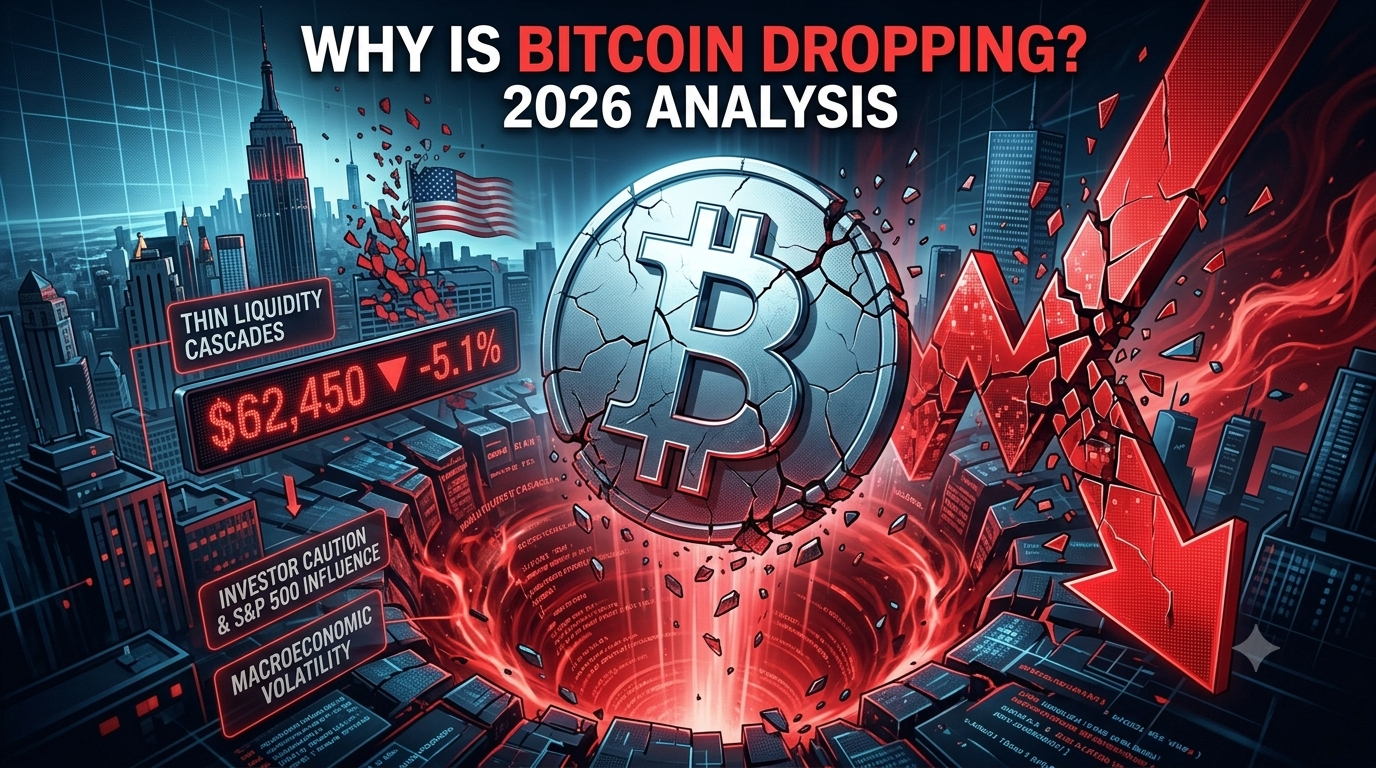
Why Is Bitcoin Dropping? Understanding 2026 Market Volatility
In the fast-paced world of digital assets, few things grab the attention of investors quite like a sudden downward shift in Bitcoin’s valuation. As of mid-July 2026, Bitcoin is hovering near the $62,000 mark. While seasoned “HODLers” are often accustomed to the rollercoaster nature of the crypto market, recent price fluctuations have left many wondering: Why is the Bitcoin price dropping?
To understand today’s market, we must look beyond the ticker symbol and explore the complex interplay of macroeconomic forces, institutional behavior, and the shifting landscape of digital finance.
The Macroeconomic Backdrop
The primary driver of Bitcoin’s performance in 2026 remains its role as a macro-sensitive asset. Unlike its early years, Bitcoin is now deeply integrated into the global financial system. When U.S. markets react to inflation reports, Federal Reserve testimony, or interest rate expectations, Bitcoin often moves in tandem with—or sometimes more aggressively than—traditional risk assets.
Current market caution stems from a “wait-and-see” approach regarding U.S. economic data. When inflation remains “sticky,” investors often pull back from speculative assets, preferring the safety of cash or high-yield bonds. Furthermore, with the potential transition in Federal Reserve leadership looming, the uncertainty surrounding future liquidity management is causing some investors to reduce their exposure to volatile assets.
Institutional Accumulation vs. Short-Term Trading
A notable difference in the 2026 market is the presence of spot Bitcoin ETFs. These vehicles have changed the market structure, turning Bitcoin into a bridge for traditional asset managers.
However, this institutionalization brings a new dynamic. While long-term storage addresses continue to show accumulation—a sign of conviction—spot trading volumes have seen significant declines. When liquidity is thin, even moderate sell pressure can cause a disproportionate dip in price. The “drop” we see is often less about a lack of belief in Bitcoin and more about a cooling off in short-term speculative buying conviction as the market awaits a clear signal.
The Leverage Factor
Derivatives markets continue to play a massive role in day-to-day price action. Traders often utilize leverage to amplify gains, but this creates a fragility in the market. When a slight price dip occurs, it can trigger a cascading series of liquidations—forced selling of long positions—which drives the price down further in a short window. This “deleveraging” effect is a classic feature of Bitcoin price corrections and is often what turns a minor pullback into a more noticeable drop.
Navigating Market Cycles in 2026
It is important to remember that Bitcoin operates in cycles: accumulation, expansion, peak euphoria, and correction. After periods of growth, markets naturally consolidate. Even during the current, more “mature” phase of the market, volatility is an inherent feature rather than a bug.
For the average investor, the current price action serves as a reminder of three critical strategies:
-
Adopt a Long-Term Perspective: Historically, time in the market has proven more effective than timing the market.
-
Dollar-Cost Averaging (DCA): By investing a fixed amount at regular intervals, you minimize the impact of short-term volatility and remove the stress of trying to buy the “bottom”.
-
Portfolio Diversification: Never rely on a single asset class. A balanced portfolio that includes stocks, bonds, and other assets can help mitigate the risks associated with crypto-specific downturns.
Looking Ahead: What Should Investors Watch?
As we move through the second half of 2026, the sentiment remains cautiously optimistic. The underlying foundation of the market—driven by constrained supply and continued institutional interest—is more resilient than in previous cycles.
Investors should keep a close eye on:
-
Macroeconomic Reports: Inflation data and Federal Reserve policy shifts remain the leading indicators for risk assets.
-
ETF Inflows: Persistent, consistent buying from ETF providers suggests that institutional accumulation remains a floor for the market price.
-
Regulatory Clarity: Ongoing progress in U.S. market structure and stablecoin legislation will likely play a role in defining the next wave of capital migration into the space.
Conclusion
A Bitcoin price drop can be unsettling, but it is rarely an isolated event. It is usually the result of a complex interplay between macroeconomic uncertainty, thin liquidity, and the inevitable cycle of market deleveraging. By focusing on the structural health of the network—such as the increasing number of long-term holders—rather than the daily volatility, investors can better navigate these turbulent waters.
The market in 2026 is structurally different from what we saw five years ago. It is deeper, more complex, and more closely tied to the global economy. As always, the best defense against volatility is education, a long-term plan, and the discipline to stick to your investment goals regardless of the noise.
Disclaimer: This article is for informational purposes only and does not constitute financial advice. Always conduct your own research and consult with a qualified financial advisor before making investment decisions.
Would you like me to elaborate on any of these factors, such as how the Bitcoin ETFs are specifically impacting the daily trading volume?